
MzansiXchange
Pilot Launch
National Treasury Launches the MzansiXchange Pilot
National Treasury launches MzansiXchange to drive more integrated, data-enabled public services. The pilot marks a significant step toward improving coordination and secure data sharing across government.
On 9 October 2025, the National Treasury of South Africa launched the MzansiXchange pilot at an event in Pretoria, marking a significant step towards a more integrated and data-enabled government.
In his keynote address, the Director-General of the National Treasury, Dr Duncan Pieterse, reflected on the growing importance of data as a strategic public asset and the need to move from fragmented systems towards coordinated, implementation-focused reform.
Providing technical context, Dr Ayanda Hlatshwayo, Acting Chief Director for Data Analytics and Policy, described MzansiXchange as an initiative aimed at changing how government works in practice. “We are trying to build a system that fundamentally changes the way government operates,” she noted, emphasising secure verification and responsible data sharing without centralising data.
The programme featured senior speakers and panellists from across government, including:
- The Director General of the Department of Home Affairs, Livhuwani Tommy Makhode
- The Head of the Digital Service Unit in the Presidency, Melvyn Lubega
The panel brought together institutions spanning public finance, service delivery, digital governance, and social policy, including:
- South African Social Security Agency
- Department of Public Service and Administration
- National Student Financial Aid Scheme
- The Office of the Accountant General
The discussion was moderated by Tanya Cohen of the National Planning Commission.
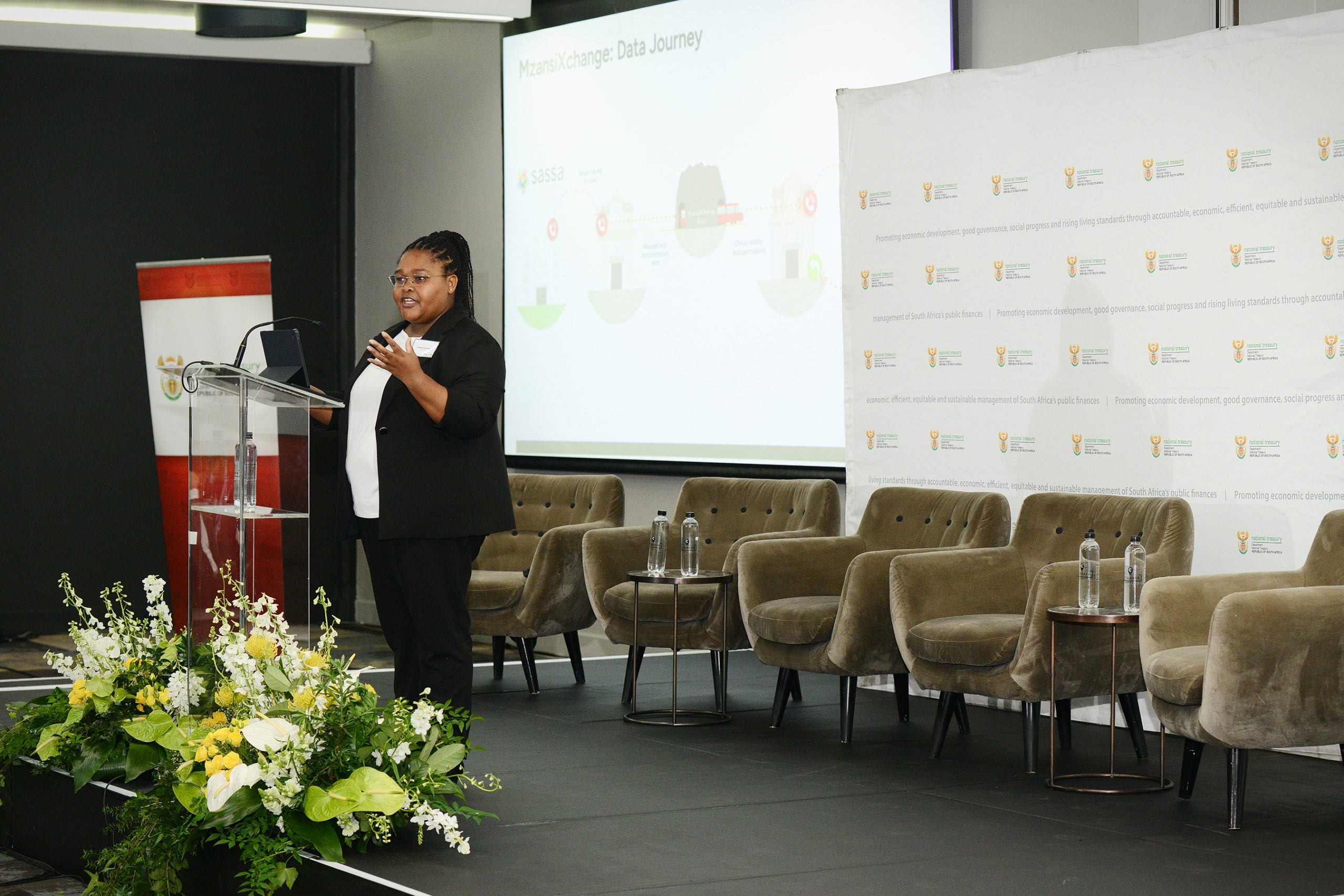
Dr Ayanda Hlatshwayo – Acting Chief Data Analytics Officer of the National Treasury of South Africa and lead of the initiative

Panel discussion led by Tanya Cohen with Shabeer Khan, Mandla Ngcobo, Waseem Carrim and Fanie Sethokga

Livhuwani Tommy Makhode – Director-General of the Department of Home Affairs of South Africa
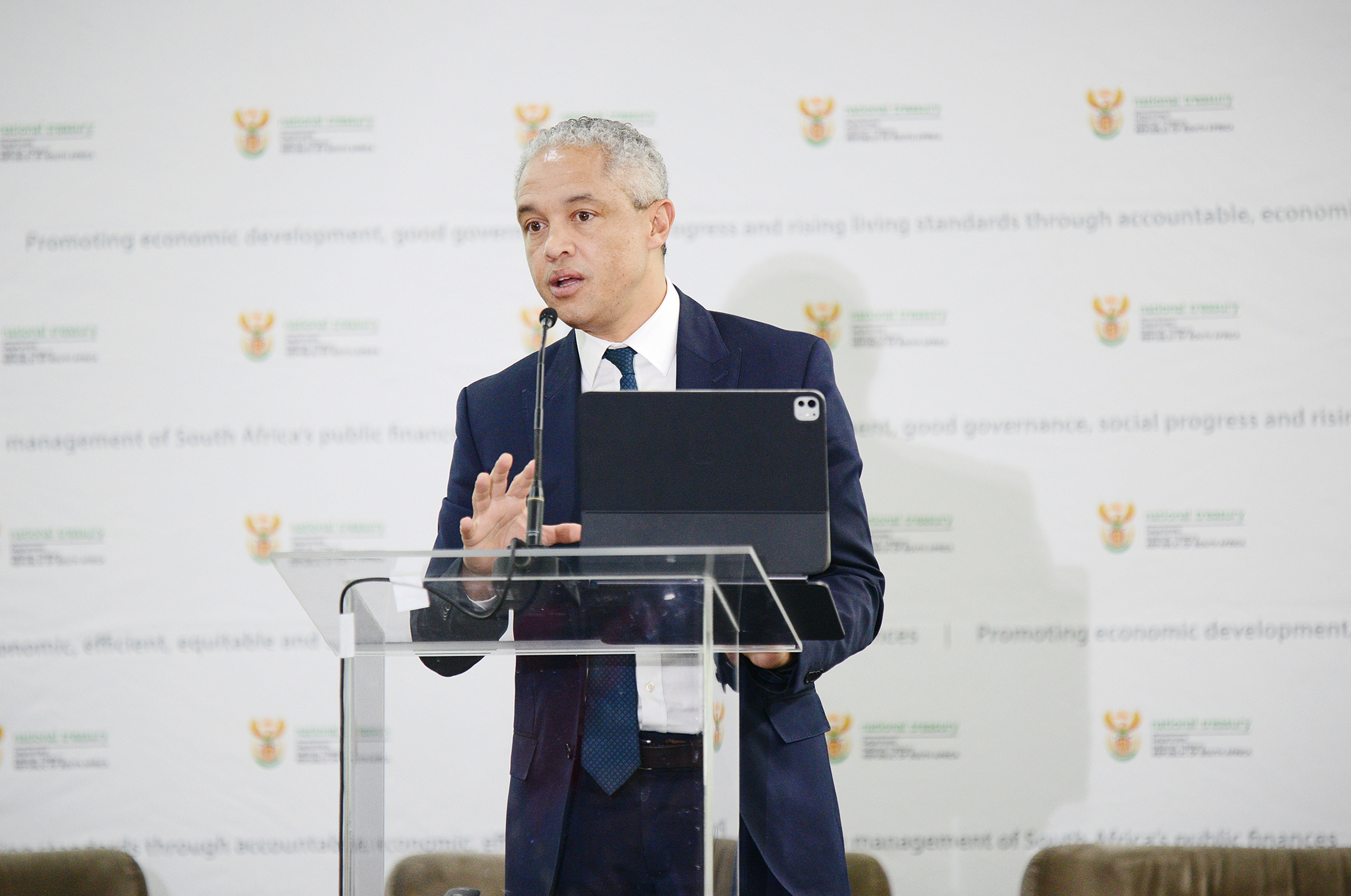
Dr Duncan Pieterse – Director-General of the National Treasury of South Africa
Panellists focused on the practical challenges of moving from system design to implementation, particularly around verification, interoperability, and coordination across departments. These challenges were discussed in relation to high-impact government processes—such as grants administration, student funding, regulatory oversight, and internal government operations—where the MzansiXchange pilot is expected to demonstrate value during the pilot phase, rather than only test concepts.
Speakers repeatedly stressed that MzansiXchange is not a central database, but a trusted data exchange that allows departments to retain control of their own data while enabling secure, auditable data sharing. This model was framed as critical both for building trust and for delivering early, visible improvements in how government systems interact.
The discussion also situated the pilot within South Africa’s broader shift towards Digital Public Infrastructure (DPI), including reforms under Operation Vulindlela Phase II. Improved interoperability was highlighted as a foundational enabler of more seamless digital public services, reducing duplication and allowing verification to take place securely in the background.
Governance emerged as a central theme throughout the event. Speakers underscored the importance of common standards, legal agreements, and interim governance arrangements that allow progress during the pilot while laying the groundwork for longer-term institutionalisation.
Running from October 2025 to September 2026, the pilot will focus on a set of priority use cases involving institutions such as SASSA, and the Department of Home Affairs, among others. Using an agile, learning-oriented approach, the pilot aims to showcase practical public value early, while generating evidence to inform decisions on future scale-up.
The launch marked the start of a collaborative implementation phase—bringing together institutions across government to demonstrate how secure, interoperable data exchange can improve outcomes for citizens while strengthening trust, transparency, and accountability.