
The MzansiXchange employs a lean, scalable architecture combining hardware and software components based on international best practices. The only thing a member needs is a running instance of the MzansiXchange software, which can be hosted in low-resource environments. This software verifies a member and enables data exchange directly between members.
In any data exchange transaction, there are three key components:

Data Exchange
Powered by X-Road infrastructure, this component facilitates secure, standardised, and compliant data flows between members.

Data Provider
A member providing data and associated metadata, access controls, and integration tools.

Data Consumer
A member accessing data via standardised interfaces.
A member can play both data provider and data consumer roles.
How It Works
- Data is discoverable via a central catalogue, interoperable, standardised, and well-documented.
- Data is shared securely, in line with best international practice.
- Access is governed by clear protocols, with every transaction tracked through an audit trail.
- Sharing methods include real-time, non-real-time, and bulk transfers to support:
-
- Evidence-based policy and decision making, planning and research
- Regulation, compliance and verification
- Operations
-
MzansiXchange is being built as a federated data exchange with initial centralised coordination. This approach balances departmental data sovereignty with secure, cross-government data sharing through a structured and governed framework. Over time, the exchange will evolve into a fully distributed ecosystem, where departments can share data directly with one another, with minimal central coordination.
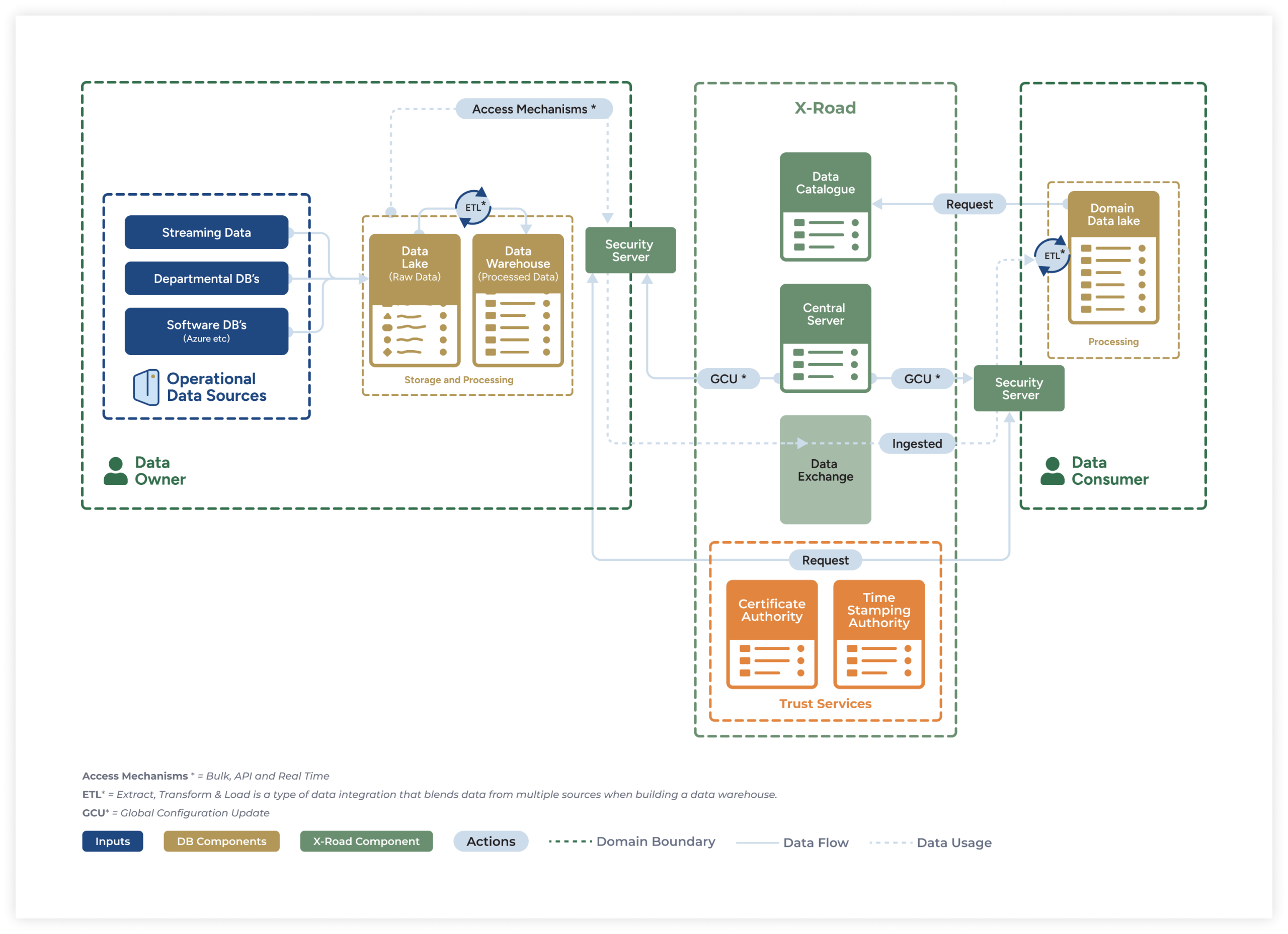
This architecture supports:

Integration of previously siloed datasets

New analytical capabilities through accessible data

Long-term scalability and sustainability

Evidence-based policymaking

Advanced research and innovation

Improved service delivery through data-driven insights